
Kidney (Renal Cell) Cancer
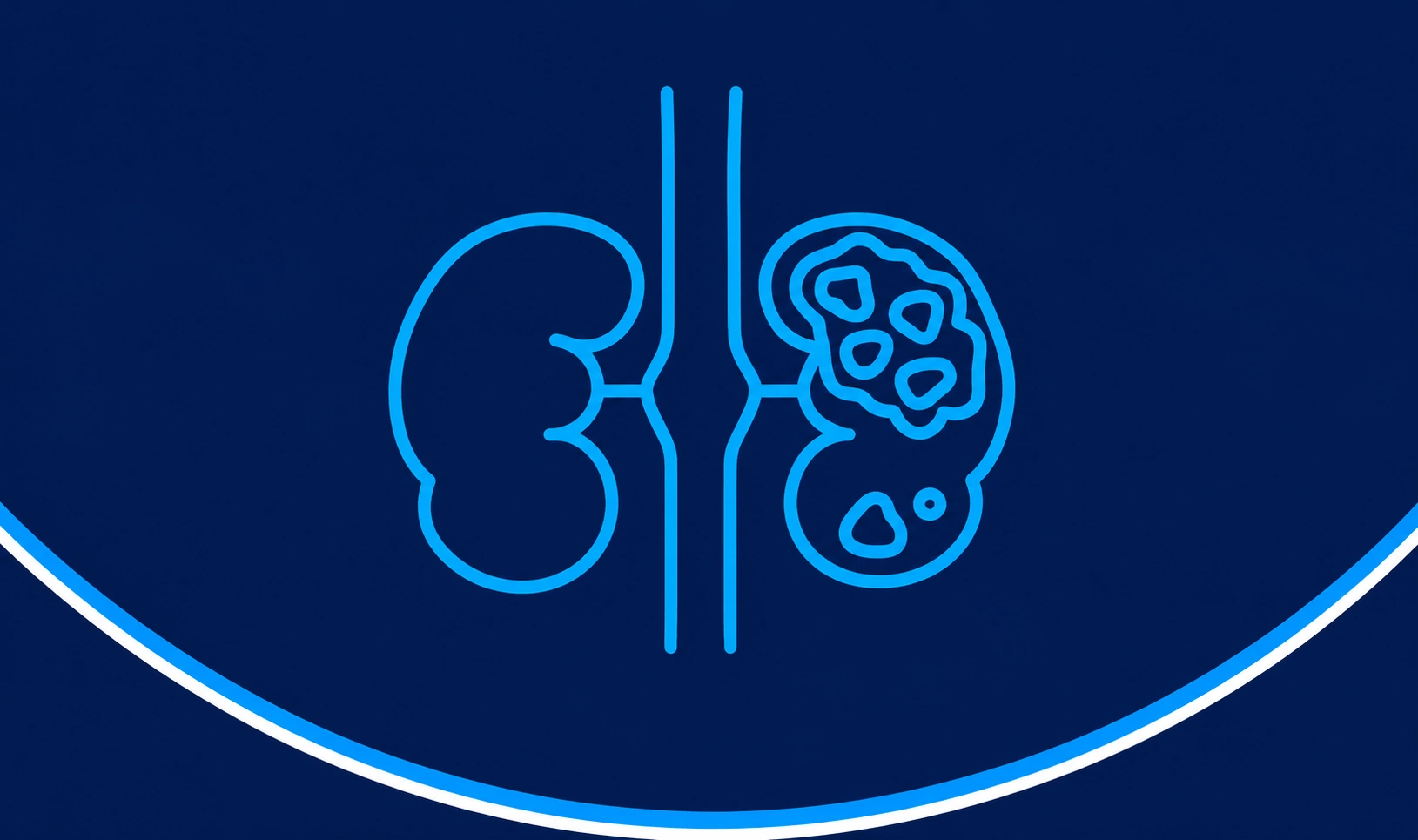
Kidney cancer occurs when abnormal cells grow uncontrollably in the kidney tissue, eventually forming a mass called a tumor. This type of cancer begins when something triggers genetic changes in kidney cells, causing them to divide faster than normal. If left untreated, the cancerous (malignant) tumor can spread to other parts of the body, a process known as metastasis.
Who Is at Risk?
Kidney cancer most commonly affects people between the ages of 65 and 74. Men are 2 as likely as women to develop this disease.
Types of Kidney Cancer
All the cancers that begin in the kidneys are not the same. Several types of kidney cancer can act differently.
Renal cell carcinoma (RCC)
It is the most common type of kidney cancer. About 9 out of 10 kidney cancers are renal cell carcinomas. Although RCC usually grows as a single tumor within a kidney, sometimes a person can have more than one tumor in a kidney or even tumors in both kidneys at the same time.
Clear cell renal cell carcinoma
It is the most common form of RCC. About 7 out of 10 people with RCC have this kind of cancer.
Papillary renal cell carcinoma
Nearly 1 in 10 RCCs have this type of cancer. These cancers form little finger-like projections (called papillae) in some, if not most, of the tumors.
Non-clear cell renal cell carcinomas
These comprise all subtypes that are not clear cell RCCs.
Rare subtypes of renal cell carcinoma: Several other subtypes each make up less than 1% of RCCs. These include:
- Collecting duct RCC
- Multilocular cystic RCC
- Medullary carcinoma (renal medullary carcinoma)
- Mucinous tubular and spindle cell carcinoma
- Neuroblastoma-associated RCC
Kidney Cancer Risk Factors
A risk factor is something that increases your chance of developing a disease. While having one or more of these factors doesn’t mean you’ll get kidney cancer, it may raise your risk:
- Smoking
- Excess body weight (obesity)
- High blood pressure (hypertension)
- Family history of kidney cancer
- Occupational exposure to certain chemicals (e.g., solvents)
Symptoms
In its early stages, kidney cancer may not cause noticeable symptoms. As the disease progresses, symptoms can include:
- Blood in the urine (may look pink, red, or cola-colored)
- Loss of appetite
- Persistent pain in the side or back
- Fatigue or tiredness
- Unexplained weight loss